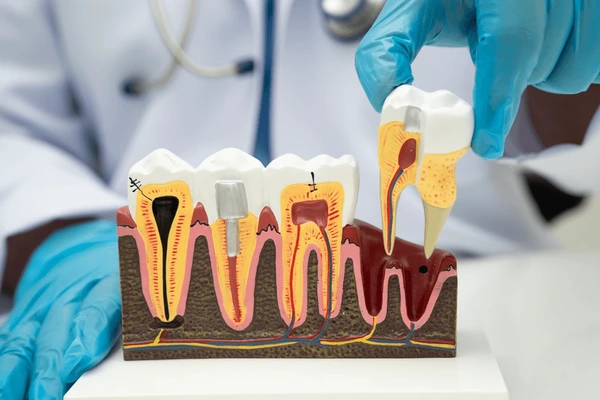
Few types of dental pain are as difficult to ignore as a toothache.
Sometimes it starts as mild sensitivity while drinking something cold. Other times, the pain becomes sharp enough to interrupt meals, make sleeping difficult, or leave you wondering if the tooth will need to be removed.
In many cases, the discomfort isn’t coming from the outside of the tooth; it’s coming from deep inside it.
That’s where a root canal can make a difference.
Contrary to what many people believe, a root canal isn’t performed to cause discomfort; it’s performed to eliminate the infection that’s causing it. By treating the problem at its source, the procedure often allows patients to keep their natural tooth while relieving the persistent pain that brought them to the dental office in the first place.
What Causes Tooth Pain That May Need a Root Canal?
A cracked tooth allows bacteria inside
Not every crack is visible, and some develop gradually from years of chewing, teeth grinding, or accidental trauma. When bacteria enter through a crack and reach the pulp, infection can develop even if the tooth looks relatively normal from the outside. Treating the infection early often improves the chances of saving the tooth before the damage becomes more extensive.
Pain continues long after eating hot or cold foods
Brief sensitivity to temperature changes is fairly common, but discomfort that lingers for several seconds or minutes after eating or drinking may indicate that the nerve inside the tooth has become irritated. Persistent sensitivity is one of the signs dentists evaluate when determining whether root canal treatment is appropriate.
Swelling or tenderness develops around one tooth
Pain isn’t the only warning sign of infection. Swelling near a single tooth, tenderness in the surrounding gums, or a small pimple-like bump on the gums may indicate that infection has spread beyond the tooth itself. Prompt evaluation helps identify the cause before the condition worsens.
Previous dental work no longer protects the tooth
Large fillings, crowns, or other restorations can last for many years, but they’re not permanent. If bacteria eventually reach the inside of a previously restored tooth, infection may develop. When enough healthy tooth structure remains, a root canal often allows the tooth to be preserved instead of extracted.
How a Root Canal Relieves Tooth Pain
Stage I – Identifying the Source of Discomfort
Tooth pain doesn’t always have the same cause, which is why treatment begins with a careful examination.
Your dentist reviews your symptoms, examines the affected tooth, and may take digital X-rays to determine whether the pain is due to an infected pulp, a crack, or another dental condition. Identifying the exact cause helps ensure the right treatment is recommended.
Stage II – Removal of Infected Tissue
Once the tooth has been comfortably numbed, a small opening is created to access the pulp chamber.
Using specialized instruments, the infected or inflamed tissue is removed from inside the root canals. Cleaning away the bacteria and damaged tissue eliminates the source of the infection rather than simply masking the symptoms with medication.
Stage III – Cleaning of the Root Canal
After the infection has been removed, the canals are thoroughly disinfected and filled with a biocompatible material to help prevent bacteria from returning.
Depending on the condition of the tooth, your dentist may recommend a crown afterward to strengthen and protect it for long-term use.
At A Glance
Who Qualifies?
Patients experiencing persistent tooth pain, prolonged sensitivity, swelling, or deep decay qualify for the treatment.
Process Overview
Step 1 Your dentist for endodontic treatment in Vandalia, IL, examines the tooth and determines the cause of your discomfort. Step 2 The infected tissue is removed, and the root canals are cleaned and sealed. Step 3 The tooth is restored to protect it and support long-term function.
Timeline
Many root canal procedures are completed in one or two appointments.
Aftercare
Follow your dentist’s suggestions for quick recovery and aftercare.
Location & Contact
Dynamic Dental Group2102 W Randolph St, Vandalia, Illinois 62471, United States
Why Many Patients Choose Root Canal Treatment
Treats the source of the pain instead of masking it
When a tooth becomes infected, the discomfort usually won’t disappear with pain medication alone. While medication may temporarily reduce symptoms, it doesn’t eliminate the bacteria inside the tooth.
Root canal treatment focuses on removing the infected tissue that’s causing the pain, allowing the tooth to heal while preserving its natural structure. Treating the source of the problem is what makes the procedure so effective at providing lasting relief.
Helps save your natural tooth
Whenever possible, dentists prefer to preserve a natural tooth rather than remove it. Every tooth contributes to chewing, speaking, and maintaining the alignment of the surrounding teeth.
A root canal removes the infection while leaving the healthy outer portion of the tooth intact. In many cases, this allows patients to continue using their natural tooth comfortably for many years after treatment.
Prevents the infection from becoming more serious
Dental infections rarely remain confined to one area. Left untreated, bacteria can spread beyond the tooth and begin affecting the surrounding bone and gum tissue.
Seeking tooth infection treatment in Vandalia, IL, as soon as symptoms appear helps prevent the infection from progressing, reducing the likelihood of complications and the need for more extensive treatment.
Restores comfortable everyday function
Persistent tooth pain often changes everyday habits. Many people begin chewing on one side of the mouth, avoiding certain foods, or hesitating to bite down because they expect discomfort.
Once the infection has been treated and the tooth has been restored, patients are often able to return to eating more naturally without constantly worrying about triggering pain.
Why Patients in Vandalia Seek Early Treatment
One of the biggest misconceptions about tooth pain is that it will eventually go away on its own. While the discomfort may temporarily decrease, the underlying infection often continues progressing.
Seeking treatment early gives your dentist a better opportunity to preserve the tooth before the damage becomes more extensive. Patients considering a root canal often appreciate understanding exactly what’s causing their symptoms before making treatment decisions.
Whether you’re experiencing persistent pain, lingering sensitivity, or require an emergency root canal in Vandalia, IL, a prompt evaluation helps identify the source of the problem and determine the most appropriate treatment to restore your comfort.
FAQs
1. How can I tell if I need a root canal?
Lingering tooth pain, long-lasting sensitivity to hot or cold, swelling around a single tooth, pain when biting down, or deep cavities can be signs of an infected tooth pulp. The best way to find out if you need a root canal is to get a dental exam.
2. Is root canal treatment painful?
Today, root canal procedures are performed under local anesthesia to ensure the patient is comfortable during treatment. There may be some mild tenderness afterward, but most patients feel that the pain from the infection was much worse than the recovery.
3. How long does it take to do a root canal?
Most root canal procedures can be done in one or two visits. How soon this is done depends on how severe the infection is, where the tooth is located, and whether a permanent restoration, such as a dental crown, is recommended afterward.
4. Can a root canal be done in an emergency?
Yes. If you’re experiencing severe tooth pain due to an infection inside the tooth, you may be a candidate for an Emergency Root Canal in Vandalia, IL to relieve your discomfort and prevent the infection from worsening. Once your dentist has assessed the tooth, they will recommend the best course of action.
5. Will I need a new crown after a root canal treatment?
After a root canal procedure, a dental crown is often recommended for many teeth, especially molars and premolars, to help restore strength and protect the tooth against future breakage. Your dentist will recommend the best restoration based on your individual case.
Conclusion
A root canal is one of the most effective ways to relieve tooth pain because it treats the source of the problem and not just the symptoms.
The procedure allows patients to return to their routine with greater comfort, eliminating infection, preserving the natural tooth, restoring normal function, and protecting their long-term oral health.